
La Réunion Cemetery
La Réunion Cemetery is an important representation of two populations which helped build Dallas. European colonists in the mid-1800s settled in the area and had a profound effect on the culture and growth of Dallas. Later, on the same land, Cement City workers (many of whom were Mexican nationals fleeing the Mexican Revolution) turned the abundant limestone they stood upon into cement which literally built Dallas. It is in gratitude to these cultural and physical builders of our city that this website is dedicated.
This website deals with historical research and education regarding La Réunion Cemetery. For issues of cemetery management, preservation, beautification and improvements see Friends of La Réunion Cemetery.
For history of the Colony see La Réunion Colony History (opens in a new window) on Facebook.
In June 1855 about 200 colonists from mostly France, Belgium, and Switzerland arrived at the recently purchased La Réunion Colony land about 3 miles west of the small town of Dallas. Other waves followed. The goal was a utopian socialist society modeled on the teachings of French philosopher Charles Fourier.
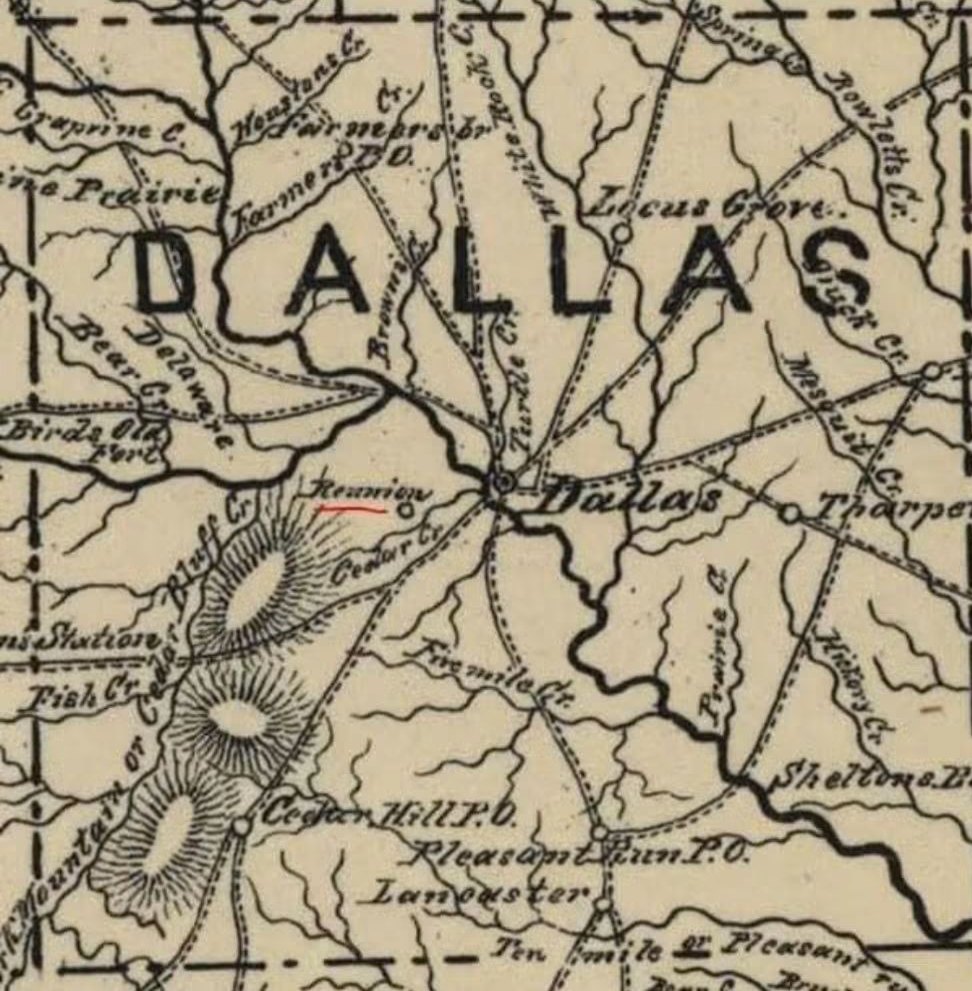
Source: Helmuth Holtz’s Map of Texas, 1867
Most of the colonists were intellectuals, musicians, artists, and shopkeepers rather than experienced farmers. This was not good for the colony but proved to be very good for Dallas. After the colony collapsed 18 months later, some colonists returned to Europe but many stayed and had a profound effect on Dallas and Dallas culture. They gave Dallas its first piano, brewery, and butcher shop among many other things. One colonist later became a Dallas Alderman and another became Mayor, twice. Noted botanist Julien Reverchon helped document the flora of the American Southwest.
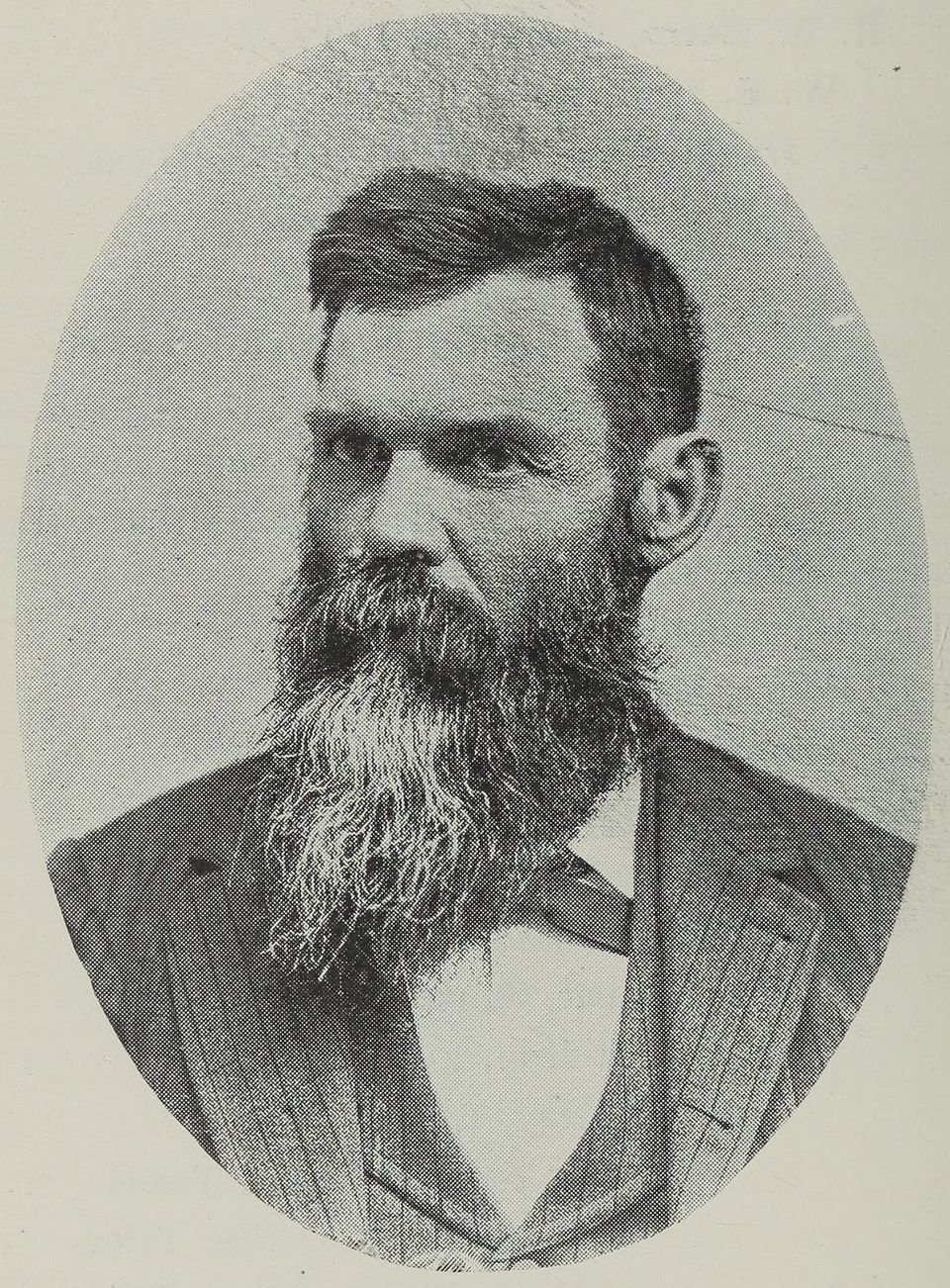
The colony peaked at about 350 in the autumn of 1856, almost rivaling the population of Dallas. In total, about 500 colonists lived there at various times.
In addition to the lack of farming skills and challenging growing conditions, reasons for failure included a blizzard in May of 1856 followed by a drought and grasshoppers. Victor Considerant, the founder, also actively worked against the colony because he was trying to form a larger colony elsewhere.
After the colony failed, the limestone hills that had thwarted the French farmers proved to be perfect for a different purpose. In the early 1900s, massive cement plants took over the area, creating a highly segregated, rough-and-tumble company town known as Cement City. It drew thousands of poor laborers—predominantly Mexican immigrants and working-class families—looking for factory work. Some of the workers were fleeing the Mexican Revolution.
People are usually surprised to learn there are more people from Mexico buried at La Réunion Cemetery than there are from France. It is to honor everyone’s contributions to the area and accommodate foreign visitors that we make this website available in English, French, and Spanish.
Known birthplace outside the U.S.
| Country | Burials |
|---|---|
| Mexico | |
| France | |
| Switzerland | |
| Scotland | |
| At sea | |
| Austria | |
| England | |
| Germany | |
| Ireland | |
| Norway |
28 birthplaces unknown.
Source: Find a Grave, La Réunion Cemetery, 252 memorials as of October 19, 2026.
The cemetery has one more famous connection to early Dallas history. In May 1934 Bonnie Parker of Bonnie & Clyde notoriety (the Barrow Gang) was buried here. Due to her gravemarker being frequently vandalized, in 1945 Bonnie, her toddler niece and nephew were moved to Crown Hill Cemetery where her mother had been buried the year before. Some of her mother’s relatives remain buried here.